
Fully-Furnished Office Space For Mental Health and Wellness Professionals In Louisville
Do you want to focus on the important part of starting your private practice - actually focusing on your clients and meeting their needs? Then you may benefit from renting a fully furnished office space that gives you the peace of mind that your space is always prepared for you and your clients without the headache of a rental space upkeep and maintenance.
Are you a new business owner?
In need of office space?
Not in the space, or don’t want to furnish an office by yourself?
Need a temporary or second office location?
If you answered yes to any of the above questions, you might be in the market to rent a fully furnished office space opposed to renting a blank slate.
Renting a fully furnished office space does have its limits, such as individualization of décor. But the affordability, convenience and ease definitely out way the negatives.
Below we will specifically focus on a shared workspace for mental health and wellness professionals in Louisville, Kentucky called b.mindful Louisville.
5 Reasons To Rent A Fully Furnished Office
Turn key
o No need to stress about what furniture to buy, where this chair should go, that desk should go and if this artwork goes well with that pillow.
o No need to fret about scheduling a big move, or how you are going to transport and carry that couch and desk.
o b.mindful Louisville’s fully furnished offices are turn key and are already designed, furnished, stocked with the necessities and ready to go! The idea is to make it as easy as possible for you to enter your office each day feeling secure, confident and prepared to tackle what the world brings to you.
Great for short term use
o Do you only need an office once or twice a week? Are you between offices, or new to Louisville? Dependent on your needs, renting a fully furnished office space could be a smart move and make for a smooth transition.
Offers convenience
o With affordability and accessibility being the two most important factors to consider when renting office space, it is important to note that b.mindful Louisville offers both.
o Afforability: Fully furnished office spaces have the ability to spread out the cost of furnishings and amenities among multiple tenants. Therefore, making overhead costs less expensive for each tenant. At b.mindful Louisville the prices are structured in a way so each tenant can walk away profiting after their first day seeing clients!
o Accessibility: b.mindful Louisville is located in the Bashford Manor neighborhood, directly off the Watterson Expressway with easy access to downtown, South Louisville, the East End and public transportation.
Low startup costs
o This is a given, but it needs to be said. By renting a fully furnished office you will not have to buy any furniture. This will save you time, lots of money and the hassle of having to move your furniture in and out of the office.
Helps new businesses get moving fast
o By eliminating your need to buy furniture, décor, and office supplies your overhead startup costs are drastically lowered. Therefore, allowing your business to have more disposable income for other expenses, and/or allowing your business to see a profit even faster!
It is important to note for mental health and wellness professionals, that not all fully furnished office rentals are created with your specific needs in mind. At b.mindful Louisville, we take security and confidentiality very seriously in order to create a like-minded supporting environment and to ease the process of being a human helper.
Call us at 502-528-1363 for a tour of our space, or click here to schedule a walkthrough.

Shannon Gonter, LPCC
Have additional questions? Feel free to message me and ask!
I’m a professional counselor and understand the importance of having a safe space to practice in, consulting, networking, having a solid referral list, and being around other like-minded professionals.

Importance Of Design Within The Office
On top of your mental health or wellness degree, did you also happen to pick up an interior design degree? The answer is going to be a hard no for the bulk of us. So, what now? How are do we design an office that we both love and want to spend our days in but also make our clients feel welcomed and secure in?
On top of your mental health or wellness degree, did you also happen to pick up an interior design degree? The answer is going to be a hard no for the bulk of us. So, what now? How are we supposed to design an office that we both love and want to spend our days in but also make our clients feel welcomed and secure in?
Well I am not an interior designer by any means, but I do have an interest in it, have an eye for what looks good together and am obsessed with the idea that simple touches and décor can have such a large impact on how we feel when we are inside a room.
If you aren’t in the same boat as I am and are feeling completely lost when it comes to office design, ask yourself these questions.
What do I use my office for?
Is my office comfortable?
Are there organizational systems in place?
Do the colors within the space evoke any emotions?
Practicality
In order to make sure your office fits your needs, you’ll need to answer a few more questions.
What do you do? Are you a therapist, a psychologist, a psychiatrist, a life coach, a reiki practitioner, or a dietitian?
How many people are in your office at once? 1, 2, 3, 4 or more? Usually 1 but sometimes 4?
What do you use your office for? Are you solely sitting and talking with your clients or do you sometimes stand up and do physical movement? Do you need space for a treatment table to do energy work on? Or do you need a designated writing space for testing or art work?

Dependent on your answers, the needs for your office are going to look different. If you are solely sitting and talking with one client at a time, you can get away with a smaller office, a small desk, love seat and chair. But if you are doing work with 3+ people at a time or needing space for movement you are going to want to ensure that your office is large enough for this, or that your furnishings are lightweight enough to be easily moved to the sides of the room.
Comfortable
In order to fully answer the question of “is my office comfortable” you will need to be willing to see your office from another perspective and listen to your friends and family’s honest opinions. Okay so first, walk into your office as if you were the client. Sit where they would sit. Do what they would do. The difference in perspective allows you to step outside of your provider lens and see the space from your client’s point of view. Maybe you notice from the clients chair that you can’t see the clock, or that the pillow on the couch is very prickly. Pay close attention to all details and make tweaks from there.
Next, invite a few trusted coworkers, friends or family members into your office to give their honest opinion. The point of doing this is to get different sets of eyes on the space and various points of view on how it makes them feel. Though this is your office, it is not only for you. You want to make sure that it is welcoming to a wide variety of people in order to appeal to all your clientele.
Organization
Dependent on your natural state of organization, this area might come easier to some than others.
For those that are naturally inclined to organizational techniques (me) and thoroughly look forward to going to the The Container Store (literally the best place in the world). This will be a breeze for you and honestly might be your favorite part of designing your office.
But for those who aren’t naturally interested in label making, file folders and color-coded systems, don’t fret! You are not going to have to shift your entire way of doing things, but you do need to find out if you are naturally messy, disorganized, or cluttered (yes, there is a difference).

Messy = untidy or dirty
Disorganized = spaces that lack structure
Cluttered = too many things in a small area
In summary, if you are in the messy category, you are going to want to clean up a bit. If you are in the disorganized state, just don’t let it get out of control because once it does it’ll be hard to manage. If you are in the cluttered state, put some time aside to go through the items little by little and get rid of what you don’t need.
Think about how you would feel paying money (sometimes a lot) to a provider for a service, and then walking into their office and the trash is overflowing, there are stains on the carpet, and it smells unpleasant. No matter how good of a clinician you are, it is going to make your clients think “if he/she can’t even manage to take out the trash on a weekly basis, how is he/she going to be able to help me?”
What works for you and your business is what’s most important, so deep dive into your patterns and what category your office falls into and make adjustments in order to have your office depict who you are as a wellness provider.
Learn organizational tips here, here and here.
Color
Close your eyes and image you are walking into a bright yellow room with white furniture. How do those colors make you feel? Okay now do it again but imagine you are walking into a light blue room with wood toned furniture. How do those colors make you feel?
Were the feelings the same after each imagery? For most people they are not. Most describe initially feeling energized by the yellow but not wanting to stay in that room for long. With the light blue room, most describe feeling welcomed and comfortable. After doing some research on various color theories, I stumbled upon Angela Wright and her “Color Affects System”.
For the 4 primary colors she summarized that:
The color blue affects the mind and stimulates higher productivity.
The color green affects emotions and causes balance, calmness and reassurance.
The color yellow affects creativity levels and self-confidence.
The color red affects the body and causes a physical exertion response.
With the wide spectrum of hues available, it can get tricky knowing what the best options are for your space. Some things to take note of in regard to wall color is that it is not recommended to use intense colors in an office where emotions tend to run high and it is usually safest to go with a pale color on the walls for a calming or soothing overall vibe.
In regard to other décor within the space, it is recommended to use more than one color to create a color palette (one or two other colors to create balance within the space).
If you are still completely overwhelmed about the design of your office and not knowing what way to turn, you can always:
1. Ask a friend or family member to assist you in decorating or hire someone (Houzz may be able to assist in finding a professional)
2. Rent a furnished office from shared workspaces such as b.mindful Louisville
3. Share an office with a like-minded provider (check craigslist for postings or ask around your clinical community for availability)
Photos taken by Bryan Moberly

Shannon Gonter, LPCC, Owner and Founder of b.mindful Louisville

Who Rents From b.mindful Louisville?
We only rent to individuals that are licensed and certified mental health and wellness professionals. This creates a like-minded support network, as well as a safe, welcoming, and confidential environment for the clients seeking services. Specific features and amenities such as separate patient entrances and exits cater to your practice’s exact needs.
Collaborative style work spaces are popping up all over the city lately. You can now rent a desk monthly, share an office space or even just rent conference rooms by the hour. While all of these are great, flexible options to have if you work part-time, remotely or own a business, none of them cater to the specific needs of the mental health and wellness professionals. We understand the unique challenges that finding office space presents and that’s why we have created B.Mindful Louisville.
We only rent to individuals that are licensed and certified mental health and wellness professionals. This creates a like-minded support network, as well as a safe, welcoming, and confidential environment for the clients seeking services. Specific features and amenities such as separate patient entrances and exits cater to your practice’s exact needs.
Because we look to build a community as well, we made sure that our rental office space is just the right size. It allows you to bond with your office mates and build a community of similar individuals that can assist each other in becoming the best mental health and wellness professionals possible. We offer practice building materials and support for all tenants.
Mental Health & Wellness Professions We Rent To:
Professional Counselors
Social Workers
Marriage and Family Therapists
Addiction Counselors
Pastoral Counselors
Psychologists
Psychiatrists
Psychiatric Nurse Practitioners
Meditation Specialists
Alternative Medicine Specialist
Life Coaches
Certified Reiki Practitioners
Wellness Coaches
Nutritionist and Dietitians
Career Specialist
Speech and Language Professionals
…other wellness professionals

Shannon Gonter, LPCC, Owner and Founder of b.mindful Louisville.
I’m Shannon, a professional counselor and understand the importance of having a safe space to practice in, consulting, networking, having a solid referral list, and being around other like-minded professionals.

7 Mistakes Made By Seasoned Clinicians in Private Practice And What They Would Do Differently Now
New to private practice and needing some guidance? Well we’ve got some for you, along with advice from seasoned clinicians in private practice on the mistakes they wish they could re do when starting their practices.
New to private practice and needing some guidance? Well we’ve got some for you, along with advice from seasoned clinicians in private practice on the mistakes they wish they could have avoided when starting their practices.
Okay so let’s dive right into it.
Mistake 1: Not starting out with electronic health records (EHR) from the get-go.
Benefits of having electronic records for your mental health practice includes, but is not limited to, the ability to streamline scheduling, automated reminders for client sessions, clinical documentation, billing software, and revenue management and reporting.
Most recommended platforms for mental health professionals are:
“My life would have been a lot easier back in the day if I could have streamlined everything to be online.”
“I would have saved a lot of trees along the way if I used an EHR from the beginning.”
“I thought it was too pricey at first when I only had 2 clients but looking back, the price would have been worth my sanity!”
“It was a pain in my &*% having to switch over all my clients from paper-based filing to an EHR once I had a full caseload.”
Mistake 2: Renting an entire office

Do you work 24/7? No. So why sign a traditional 24/7 lease? Sharing an office space can lead to lower costs, fewer responsibilities, more networking opportunities, smaller commitments, and more support for you and your growing practice. Companies like b.mindful Louisville provide safe, clean, practical and modern offices for mental health and wellness professionals in private practice. By entering a community like this you will be provided with a like-minded support network, as well as all the furnishing and amenities to support your growing practice.
“Would have been in a better space financially if I could have just rented a space to practice for 1-2 days a week.”
“Wasted a lot of time trying to find someone to sublease my office when I wasn’t there, and that time could have been spent on my clients or with my family.”
“Wouldn’t have gone right into renting an office on my own honestly.”
“I was so stressed at the beginning and my overhead costs were so expensive. It was tough having to juggle rent, utilities, supplies, and marketing all while building up my caseload. Would have been a lot better for me to share an office at first.”
Mistake 3: Not networking
At its most basic form, networking is about building and maintaining relationships with people which may lead to a mutually beneficial exchange at some point in the future. Think about your ideal client and where they go, what they listen to, who they seek guidance from and build your networking strategy around that. These can be other therapists, physicians, other wellness providers, attorneys etc.
“Wish I would have networked with others in the field sooner.”
“Wish I would have just got out there and done it. It can be scary at first, but the more you do it the better you’ll become at it.”
“Wish I asked the stupid questions and wasn’t afraid to be the newbie.”
“If only I knew how beneficial it was to market with other clinicians in the same niche. People always need someone they trust to refer to when they are full and vice versa!”
Mistake 4: Ignoring my finances

Not a lot of therapists come from a background in finance, so don’t shy away from seeking advice from professionals in order to keep your finances in order. Last thing you want is to get yourself into is financial struggles at the beginning of your private practice journey.
“Pay myself. I always forgot to do this at the beginning because I was so worried about having enough to cover the expenses. ”
“Make people pay up front for sessions and not at the end of the sessions because I always forgot to collect the payments!”
“Talked to an accountant much sooner.”
“Learned how to keep up with billing better. ”
Mistake 5: Not filing for an LLC
In order to protect your personal assets, it is advised to keep your business and personal liability separate. One way to do this is to form a limited liability company. Talk with your advisors to see what will be best for your practice and learn more here about forming an LLC for your business.
“Getting legal isn’t fun, but neither is getting sued. So protect your earnings and your family.”
“Thank goodness I never got into legal trouble, but just start with an LLC from the beginning to ensure highest levels of security for your personal and business assets.”
“Just do it, its the smart thing to do. You can do it by yourself or hire a lawyer to do it, whatever you are comfortable with.”
“It’s not exactly ‘harder’ to form an LLC once your practice is grown, but I just found that I didn’t have the time to do it like I did in the beginning when I was building my practice.”
Mistake 6: Not having an online presence

Online marketing should be at the top of our ‘to do’ list. It is one of the most cost-effective ways to reach thousands of people within seconds. Websites and social media platforms are excellent ways to target your ideal clients.
“If you are not comfortable with a website right at first, at least have a Facebook page for your business”
“I have received so many complements from clients and other professionals on my site and how much more ‘official’ it makes me look. I think that would have helped build my confidence faster when I was first starting out.”
“Having an online presence is vital to your success today, if you aren’t able to be found on Google, you might as well be a ghost.”
“Just build a website, even just a basic one.”
“You are not an expert at everything, so rely on those for help to fill in the gaps where you lag the skills for success.”
“Don’t rework the wheel, just do your research and use whats already out there. ”
“I wish I would have known about the private practice support groups and boot camps out there because all of their free resources are so helpful. ”
“Would have had a lot fewer tears if I opened up and allowed help in at the beginning. Part of it was understanding that it can still be ‘my business’ and that I can still take credit for the hard work put into it but that I don’t have to struggle alone during the process. ”

Shannon Gonter, LPCC, Owner and Founder of b.mindful Louisville
Have additional questions? Feel free to message me and ask!
I’m a professional counselor and understand the importance of having a safe space to practice in, consulting, networking, having a solid referral list, and being around other like-minded professionals.

We’ve Been Featured On FreshPractice!
b.mindful Louisville has been featured on FreshPractice, a website offering therapy office design inspiration for therapists, by therapists.
Exciting news guys!
b.mindful Louisville has been featured on FreshPractice, a website offering therapy office design inspiration for therapists, by therapists. Below is an excerpt from the interview with business owner, Shannon Gonter:
“I designed them myself. I got inspiration from Pinterest and blogs. My own personal interior decorating style for my house is very similar to the offices and I learned a majority of those skills from my mother. I did get input though from friends and family before purchasing the large items.”

In the featured post, you’ll discover the ideas of many of the décor picks found in our “contemporary neutral” offices, advice for therapists designing their own spaces, and how b.mindful Louisville creates a comfortable counseling experience for tenants and their clients by providing them with complimentary drinks, a comfortable space to sit, and additional amenities to secure their confidentiality.

You can read more about our space by clicking this link and be sure to check out the rest of the office spaces featured on FreshPractice.Design!
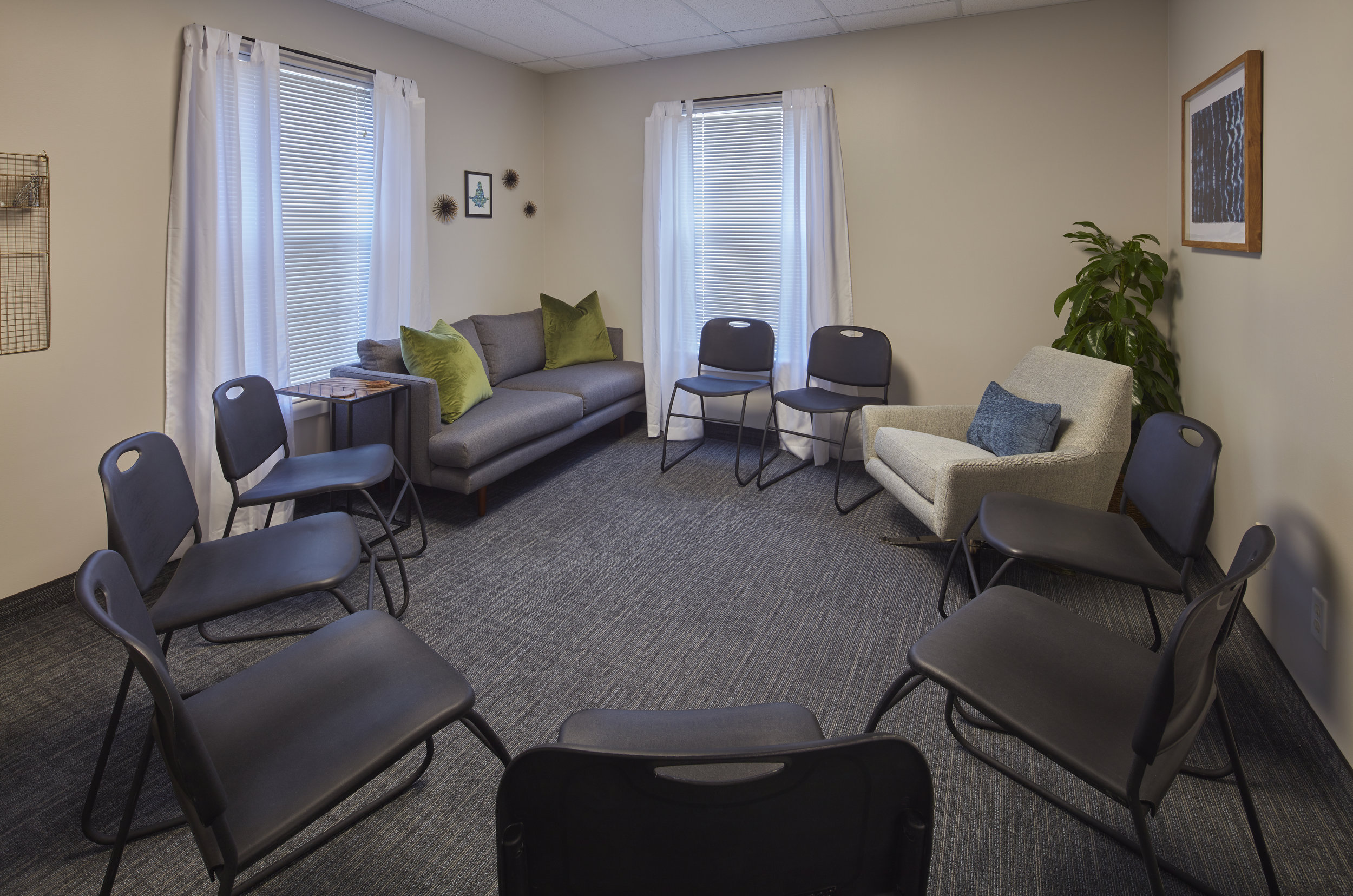

Shannon Gonter, LPCC, Owner and Founder of b.mindful Louisville
I’m Shannon, a professional counselor and understand the importance of having a safe space to practice in, consulting, networking, having a solid referral list, and being around other like-minded professionals.

How Do b.mindful Louisville Office Rentals Work?
Here at b.mindful Louisville, we offer two options for office rentals. You can rent per time block or rent an office for 24 hours. With both options, you will have access to your office during your designated time, and 24/7 access to all communal areas and amenities. We have structured this so you still make a profit after your first client and have set the prices to ensure affordability and accessibility for all clinicians.
Mental Health & Wellness Office Rental Information
Here at b.mindful Louisville, we offer three options for office rentals. You can rent per time block, rent an office for 24 hours or do our virtual office plan. With our in person tenant rentals, you will have access to your office during your designated time, and 24/7 access to all communal areas and amenities. We have structured this so you still make a profit after your first client and have set the prices to ensure affordability and accessibility for all clinicians. Learn about of virtual plans here.

Photography by Brian Moberly
For in person office rentals that are available for block rentals vary in size and prices range from $30-$35 a block. We have broken up the blocks into 6 hour windows (8:00am-2:00pm and 2:30pm-8:30pm) allowing you plenty of time to see a few clients and have some wiggle room in-between sessions.
The block rentals are great for those who have a small private practice, do not want to or don’t have the ability to do a 24-hour rental. Maybe you work full time Monday-Friday and don’t want to work weekends so to accommodate your private practice case load, you see individuals on Wednesday and Thursday evenings using the 2:30pm-8:30pm block. Or maybe you are just starting out in private practice and you don’t have any clients yet. Our block rentals are a great space to start out in order to immerse yourself in and network with a supportive, like-minded community.
The 24-hour rentals are great for those who work part time elsewhere and have a spare day to see clients, or maybe you just want more flexibility throughout the day when scheduling clients. These offices also vary in size, all having enough space for individual and couples’ therapy and some large enough to accommodate families and group treatment. These offices range from $50-$80 a day with discounts provided the more days you rent.
We have had several clinicians start their private practices in b.mindful Louisville and the flexibility of our leases has greatly cut startup costs for our tenants and allowed them to have full autonomy of how much time they want to spend in the office.

Photography by Brian Moberly
For example, one of our tenants used the 1st month to logistically set up and start marketing her practice before having any clients. She expressed it to be extremely helpful for her to have a space outside her house that she could go to clear her mind, knock out her to do list and have other clinicians around to bounce ideas off of. After a lot of time and effort put into the backend of her practice, she got her first few clients! After some more hard work, her case load out grew her 6 hour block rental so she decided to start a new lease and do a 24 hour rental to accommodate her growing practice.
Here at b.mindful Louisville, we understand that a majority of you in private practice are in it because you love being an entrepreneur, love the flexibility and the autonomy brought forward by working for yourself. Therefore, if the office space is available, we are always willing to start you a new lease in another office that better meets your growing practices needs.
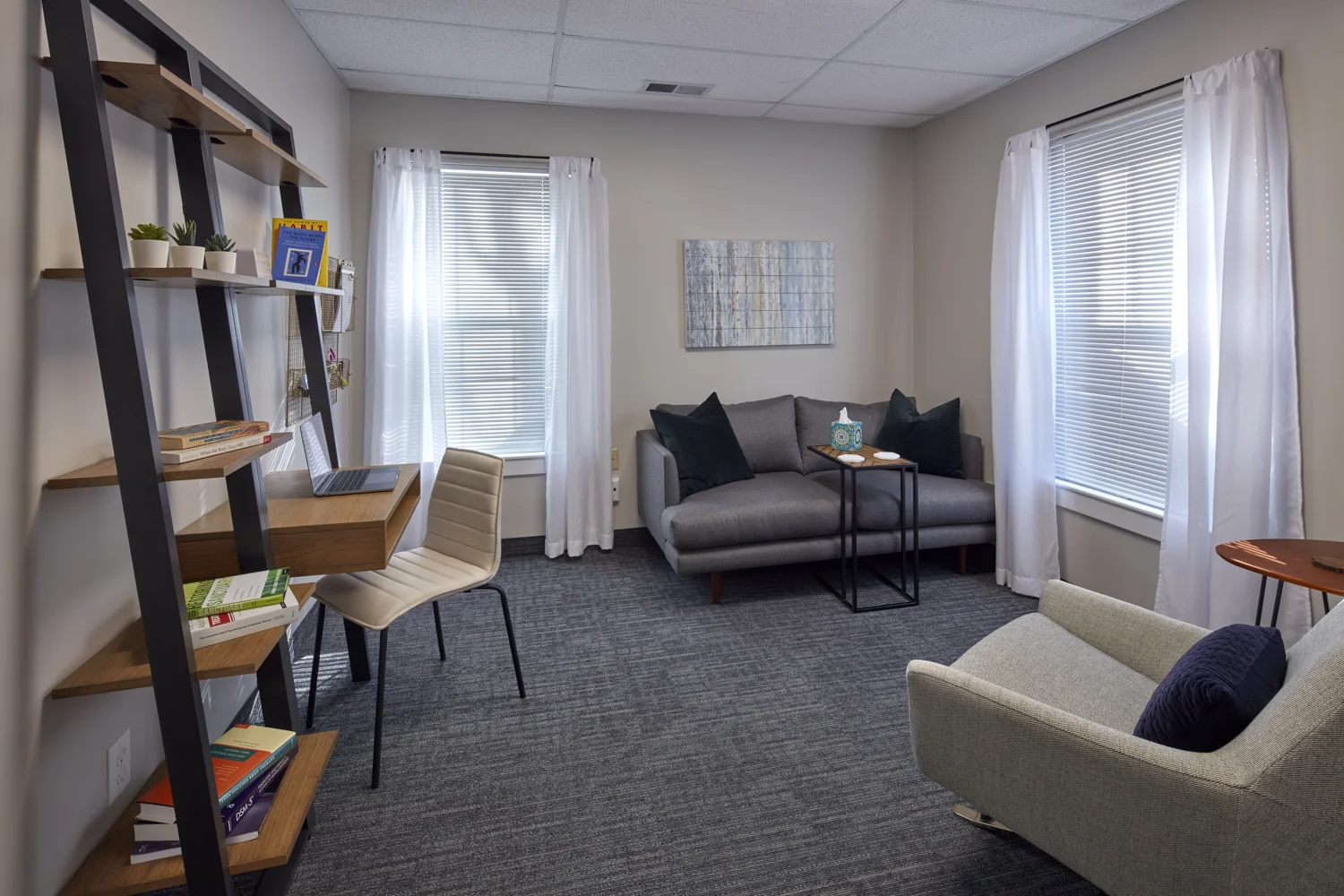
Photography by Brian Moberly
Renting from b.mindful Louisville is so much more than just writing a monthly check to your office landlord. We are interested in creating a like-minded, safe environment for you and your clients while providing you with full service amenities and serving you to the best of our abilities.
We would love to show you the space and learn more about the wonderful services you are providing to our community. Feel free to browse our website and reach out to schedule a tour.
Not needing a full time office or an address for your practice - but want community? Check out our community membership option.

Shannon Gonter, LPCC, Owner and Founder of b.mindful Louisville

What Is Included In A b.mindful Louisville Rental?
Every time you rent your mental health and wellness office space from b.mindful Louisville you will have access to your office during your designated time, and 24/7 access to all communal areas and amenities. Some questions you might have. What are the communal areas? What amenities are included in the price of my rental? What will I find in the office I rent? Keep reading and I will answer all those questions!
For our tenant plan - with every b.mindful Louisville tenant rental you will have access to your office during your designated time, and 24/7 access to all communal areas and amenities.
Some questions you might have. What are the communal areas? What amenities are included in the price of my rental? What will I find in the office I rent? Keep reading and I will answer all those questions! Our Mental Health & Wellness Office Space in Louisville, KY Include…
On the more practical side, some of the amenities you will enjoy include:
— Your Professional Environment
Break area
Table
Chairs
Printer/scanner/fax
File cabinet
Additional storage for personal items
Mail station for incoming mail
Complimentary coffee/tea/water
Kitchenette
Community bulletin board to share local news and training’s
— Your Therapeutic Environment
Couch
Side table
Chair
Side table
Desk
Shelves
Bins for shelves
Chair
Pillows (3)
Throw blanket
Lamps
Coasters (3+)
Small fake plants (3)
Large fake plant (1)
Clock (2)
Sound machine
Wall décor
Tissues
Separate entrance and exit for your clients to ensure higher levels of confidentiality
Additional chairs for family/group work or trainings (12)
Treatment table that can be used for Reiki (1)
— Easy access and stress-free parking for you and your clients
Access to your office during your designated day and time slot and access to all other communal areas, amenities and resources 24/7
On-site parking and street parking
ADA accessible
— The Extras You Deserve
Personalized and dedicated URL to your practice
Online marketing on our social media and website
Secure storage for personal items
HIPAA compliant file storage
High speed wireless internet
Printer/scanner/fax
Office supplies
Clip board
Large note pad
Small note pad
Envelopes
Post it notes
Pens
Highlighters
Sharpies
Scissors
Tape
Stapler
Paper clips
White out
Weekly office cleaning services
— You’re a Healer and You Deserve to Be Acknowledged
Physical address for your business
Furnished space
Waiting area
Plenty of seating
Complimentary water for clients
Complimentary mints for clients
TV with calming music and revolving slideshow displaying tenants in the space, any upcoming groups and events that Louisville has going on.
— Practice building resources
Print
Books
Digital
From the baseline physical criteria needed to open a private practice, to the clinical must haves, and the items to do and figure out while growing you're practice. We’ve got the support and resources available for you to use to build and create a thriving practice.
— How We Enhance Your Professional Development
Collaboration and networking with other like-minded service providers
Bi-monthly socials at local Louisville establishments to build a sense of community between tenants outside of the clinical world
Clinical consultation group with other mental health professionals from the community
Not needing a consistent physical office? Check out our virtual office rentals.
Only wanting community and marketing assistance? Check out our community membership plan.
No need to take on the additional startup costs of furnishing your own space. Each of our offices was designed with mental health professionals’ specific needs in mind. We want to make it as easy as possible for you to enter your office each day feeling safe, confident and prepared to tackle what the world brings to you.
Have additional questions? Feel free to message me and ask!

Shannon Gonter, LPCC, Owner and Founder of b.mindful Louisville
We would love to show you the space and learn more about the wonderful services you are providing to our community. Feel free to browse our website and reach out to schedule a tour.

Podcasts That Will Help You Build Your Private Practice
In the beginning stages of building my own business I listened to a lot of How I Built This. This is a fantastic podcast and I got a lot of inspiration from some of the most amazing and successful companies around the world. But on a larger scale, I had a hard time applying a lot of the information to my day to day practice and business building. I knew there had to be podcasts out there that could help me. Maybe podcasts made my therapists, for therapists to help learn the ins and outs. Maybe one to help me continue growing as a business owner and therapist. And boy did I found some.
Podcasts are the best (subjective I know but just give them a shot if you haven’t already). The process is so easy. All you’ve got to do is find a topic you want to learn about (literally anything because they’ve got a podcast on just about everything), search for it, subscribe to it and listen.
Majority of phones will have a built-in podcast app to listen to them on but you can also download additional apps for streaming. I personally prefer to use the built in “podcast” app on my iPhone and enjoy listing to true crime podcasts such as S-Town and Dirty John or ones that are more inspirational and educational such as This American Life or Invisibilia.
In the beginning stages of building my own business, b.mindful Louisville a shared workspace for mental health and wellness professionals in Louisville, Kentucky, I listened to a lot of How I Built This. This is a fantastic podcast and a lot of my inspiration came from listening to some of the most amazing and successful companies around the world talk about their stories. But on a larger scale, I had a hard time applying a lot of the information to my day to day practice and business building. I knew there had to be podcasts out there that could help me. Maybe podcasts made my therapists, for therapists to help learn the ins and outs. Maybe one to help me continue growing as a business owner and a therapist. And boy did I found some.
There are so many out there! Like a lot. So, suggestion to avoid getting overwhelmed and to not have to walk around with headphones in your ears 24/7 - don’t try to listen to every single podcast by every single person. Take your time and do your research on the hosts, their goals and see if they align with your goals and your personality.
I personally aligned best with Allison Puryear from The Abundance Practice Podcast, so I remain pretty loyal to her posts, but then from time to time I pull in a random episode from The Private Practice Startup or The Ask Juliet & Clinton Show. But that’s just me. Take a look at the list below and try out some of your favorites and then narrow it down from there and get on with building your business!
Podcasts To Help You Build Your Private Practice (not in any specific order)

The Abundance Practice Podcast with Allison Puryear
Message from the host:
“Practical advice for counselors starting and building a private practice.”

The Ask Juliet & Clinton Show with Juliet Austin & Clinton Power
Message from the host:
“The Ask Juliet & Clinton Show is a marketing podcast for therapists and natural health businesses.”

Practice of The Practice with Joe Sanok
Message from the host:
“Covers everything it takes to make your service-based private practice more awesome. It’s what you wish you had learned in graduate school.”

The Private Practice Startup with Kate Campbell, PhD, LMFT & Katie Lemieux, LMFT
Message from the host:
“On our podcast, we interview entrepreneurs, experts in the mental health and business arenas and successful private practitioners to provide a wealth of information to our listeners!”

The Online Counseling Podcast with Clay Cockrell
Message from the host:
“ The Online Counseling Podcast explores the world on online counseling and therapy and those that practice tele-medicine.”

Private Practice Talk with Kelly & Miranda
Message from the host:
“Help for creating a happy and full private practice for mental health professionals.”

Profiles in Private Practice Success with Jennifer Sneeden
Message from the host:
“Profiles in Private Practice Success showcases the most successful and innovation professionals in practice today.”

Selling the Couch with Melvin Varghese, PhD
Message from the host:
“Selling the Couch is the #1 podcast for aspiring, new and current mental health private practitioners.”

The Rebel Therapist with Annie Schuessler
Message from the host:
“A podcast for therapists who want more.”

The Therapist Experience from Brighter Vison
Message from the host:
“The Therapist Experience Podcast is the podcast where we interview successful therapists about what its really like growing a private practice.”
Would love to hear from you in the comments section on your favorite practice building podcast or if you have one that you’ve found helpful that isn’t on this list!
Have additional questions? Feel free to message me and ask!

Shannon Gonter, LPCC, Owner and Founder of b.mindful Louisville
I’m a professional counselor and understand the importance of having a safe space to practice in, consulting, networking, having a solid referral list, and being around other like-minded professionals.

Unpopular Route: Grad School --> Private Practice
Who out there is a believer that everyone must do agency work after graduate school and that new clinicians shouldn’t enter the workforce through private practice? I hear a lot of you saying “preach sister, yes you must must must do agency work first” and I get it, I really do. But then I hear some others out there saying “nah, do as you want, it’s your life, your career, and your choice”, and I happen to align more with this outlook.
Who out there is a believer that everyone must do agency/hospital work after graduate school, and that new clinicians shouldn’t enter the workforce through private practice? I hear a lot of you saying “preach sister, yes you must must put in your time” and I get it, I really do. But then I hear some others out there saying “nah, do as you want, it’s your life, your career, and your choice”.
I happen to align more with the latter - even though it looks different then my personal journey.
I know it’s a different opinion than most, but I am a firm believer of following your dreams and getting there in whatever fashion suits you best. On top of that I am also a big believer that clinicians need to have rigorous training, create and maintain solid clinical skills, have stable supports and partake in ongoing consultations. Yes, yes, I hear you out there being like “yeah duh that’s what I’m talking about, you will learn all that at an agency and then can take it with you to your private practice later.” But you don’t have to just learn them at an agency/hospital, there are other ways.
Wondering what these ways are and how individuals going straight from graduate school to private practice will learn these skills? Below I will tell you by answering some of the most common questions asked in regards to this topic.
BRING ON THE QUESTIONS.
New clinicians need a lot of oversight, who is going to oversee their sessions?
A supervisor will, just like it would be at an agency. The supervisor would provide them with the structure, support and clinical guidance needed to learn and grow in their current position no matter the setting.

Speaking from personal experience, I have felt more fulfilled and supported by my privately paid supervisors than I did by some of the agency supervisors I had. Though it is painful to fork over $100+ a month for supervision, I found that they were more present in our sessions due to not being bogged down by too much paperwork, too many supervisees, too many clients, and too much bureaucracy.
In the end, not all supervision is created equal. Therefore, no matter where you are seeking supervision from and if it’s paid for or free, do your research and advocate for yourself and your practices needs. It may also help to surround yourself with like minded professionals in order to get additional support (that everyone so desperately needs in this field).
How are they going to know what to do if they haven’t been through the grind of agency work?
They will learn on the job, just like those did in an agency. Why should one be pressured into taking a job they don’t align with just because it’s one of the only agency positions offered to them? If coming out of school one knows what population they want to work with, why waste their time, the agencies time or the clients time working with a population that doesn’t match their ideal clientele?

I believe in hard work, obviously, but I think it’s important to be strategic about where you spend your energy.
I want people to spend their time building the life that they want, not wasting it by putting in time at the local clinic so the elders in the community won’t judge them. I don’t think its necessary to force newbies to walk uphill both ways in the dead of the winter to get where they want to go when they have alternate options. The saying is “work smarter not harder” right?
How are they going to know what population they want to work with?
By using their lived experiences, their training and by doing their research inside and outside of the office.

An advantage students nowadays have is the amount of quality resources available to them at their fingertips (literally…all the answers are held in their tiny phones). There are so many resources, reviews, practice building support networks, blogs and consultants out there and this makes it easier for them to find their paths. It is a lot easier now to gather all the information, allowing them more time to think about their wants and needs for the future and empowering them to go after their dreams after graduation.
So, you're saying you want to have clients pay money to have a therapist learn on them?

Nope. I am saying that I want clinicians to feel empowered in the work that they do so they can bring their best selves to sessions and provide for their clients in the best ways possible. And let’s be honest here, who isn’t constantly learning from their clients (no matter the amount of time you’ve spent in the therapist chair)?
How are they going to juggle the clinical and business parts of private practice along with all the start up costs?

This relationship, for most of us in private practice, has a love/hate dynamic to it and is tough to juggle anyways. Therefore, we shouldn’t place judgement or dictate what’s best for others who may be more business minded or have a higher tolerance for frustrations than us.
I know some of you will agree and a lot of you won’t. Either way, I would love to know what you think. Let us know in the comments below!
P.S.- Suggestion to the masses. Check with your state licensing board to ensure that it is legal for you to enter private practice after graduation. Certain states/licenses dictate a certain amount of post graduate hours before hanging your own shingle.
Have additional questions? Feel free to message me and ask!

Shannon Gonter, LPCC, Owner and Founder of b.mindful Louisville
I’m a professional counselor and understand the importance of having a safe space to practice in, consulting, networking, having a solid referral list, and being around other like-minded professionals.

Why A Quiet Office Space Is A Must For Social Workers In Private Practice
While interacting with people is a big part of a social worker’s job they still need some form of quiet space to complete their paperwork and make phone calls. What’s more, the area needs to be one where they can focus without any sort of distractions.
While interacting with people is a big part of a social worker’s job they still need some form of quiet space to complete their paperwork and make phone calls. The area needs to be one where they can focus without any sort of distractions.
Something that social workers tell us is that they need their own space where they cannot be distracted. This is to allow them to be able to get all their important paperwork done such as documents that need to be sent to the state government or insurance company. Believe it or not, but paperwork takes up a significant portion of a social worker’s workload. So when renting an office space, it is important to have a space that they can be left alone to do paperwork and be able to focus on their clients. Keep in mind, most social workers complete paperwork that is very important to peoples lives. So if they make a mistake, they could be facing a delay in services or support for the people they are working with. So a social worker needs to be able to concentrate and focus on what they are doing some say more than other professions. And the biggest distraction of all as reported by some is office noise.
Whenever we talk to social workers, it’s apparent that they need to focus on providing assistance and services to the people that they work with. The fact that clients build their assumptions about you based in-part on the office they meet you in is a sentiment we hear repeated over and over. And to accommodate this fact, they need an office that is warm and inviting. Why does it matter? Well, meeting clients who have been abused or have other mental and family issues, it’s extra important that the space they are meeting in is comforting and should be a place where people can feel safe. However, it’s important to remember that every office does not project the same type of feeling. When businesses like financial consultants or insurance companies are looking for a space, they may be looking for the standard office. They may expect a few offices and a table that is set up like a conference room. This setup is not ideal for social workers. Rather, their office needs to be inviting, even if it goes against what other businesses may be looking for.
If the office is noisy, this can cause colossal productivity problems. Even a small amount of noise can be disturbing. Auditory distractions can have a negative impact on anyone's productivity and quality work. Things like coworkers on the phone and even notifications from a cell phone can take attention away from the task at hand. So if a social worker is sharing an office, they each need to have their own separate working space. This way they do not distract each other with phone calls and noise. This may sound like a common-sense no-brainer piece of advice. However, we have heard lots of horror stories from social workers who have had to share workspace in an “open office” setup.
Studies have been conducted on focus, and it was found that the average worker has a concentration of 11 minutes due to interruptions. So if there is noise that is distracting, any focused work like paperwork can take even longer to complete. And social workers, some say more than most, need to make sure all of their documentation is accurate. And if they keep on getting distracted with distractions, it can have an impact on their client's lives and quality of work.
When a social worker is looking for a space to get some work done, it’s vitally important to have somewhere where they feel comfortable. This is in large part due to the mentally demanding type of work that they do. They need to have an office that is free of distractions so they can work in peace and focus on what their real goal is, helping people. b.mindful Louisville is specifically designed and set up for health and wellness businesses. Call or text us at 502-528-1363 for a tour of our space, or Click Here to schedule a walk-through.

Shannon Gonter, LPCC, Owner and Founder of b.mindful Louisville
Have additional questions? Feel free to message me and ask!

3 Tips For Life Coaches Who Are Just Starting Out
Seemingly due to the growing complexity of the world, life coaching has become an increasing career choice for many. It sometimes seems that you might have advice or heuristics that another person is in search for. A skilled life coach can help other individuals follow a path that is good for their health and career.
Seemingly due to the growing complexity of the world, life coaching has become an increasing career choice for many. It sometimes seems that you might have advice or heuristics that another person is in search for. A skilled life coach can help other individuals follow a path that is good for their health and career. And coaching is not just for individuals; big corporations also hire life coaches for their top employees to help them get through rough patches and bring about solutions for their work projects. Now, if you are in the coaching field and have suddenly realized that you are not going anywhere and the work is slow, then chances are you are doing something wrong. Here are the top three tips that every life coach needs to follow.
1. Provide Solutions & Social Proof
Here is the first do and don’ts of becoming a life-coach. Your aim should be to provide solutions and remedies for a problem. Most life coaches try to be service providers, but that should not be the case. It is all about turning your coaching into a business not just dabble in it for some extra cash. To hone this skill you have and be consistent, you have to make it a business that has solutions not just services. By providing solutions, you will be able to keep a good client list. You will need to make a good brand image. Make your clients feel like you are the ONE whom they can count on in times of need. It is important for your incoming clients to know where you are reachable and can check past client testimonials. Starting any business requires a good brand image and consistency. People should know the name or at least have heard it somewhere; it will automatically bring them closer towards trusting you and your solutions.
2. Loyalty & Marketing
Every brand and business knows how important it is to create a customer loyalty factor. These customers will be the ones that are most satisfied with your services and will continuously return to you because they trust you and you are giving them exactly what they need. It is the best way to grow a business because these clients will tell the people they know how much they like you and how good you are for them. Good word-of-mouth can take a business places! It will automatically increase your client list. So, it is necessary that you treat every client with the utmost care and importance. Always start with a few clients and make sure that they are satisfied to the fullest. Use Social Media. You can create a Facebook group and Instagram page where you can start with by posting a few details of what you do and see how people respond. If your idea clicks with them then there will be no limits and people will be attracted automatically. You can post testimonials and create your brand name. Start being an exclusive coach, not just a catch-all type. Then slowly build your way up and accept more clients.
3. Rent An Office Space or Coworking Space
The third tip and the most importantly the last on our list to help you kick-start your life coaching career is to rent an office. This office should be your private space that represents your style and coaching theme. It should be a welcoming venue for your clients, who should get the feeling that you are professionally capable of helping them with their problems and are worth their time and money. The ambiance of the office should be aesthetically pleasing. Clients should feel like being 'at home.' This will enable them to open up and help you as a coach to better understand their problem. When looking at the type of offices that life coaches actually rent local to us in Louisville, KY the general opinion is that there are a few factors that really make an office a success. The list goes decor and design, location, commute, and pricing. It has to be a hip looking location so it’s stunning for potential or incoming clients. It also has easily accessible. People who are having issues in their lives don’t need to add trouble parking to their list of worries. However, when looking for a place to rent, we advise you avoid a shared space with the wrong type of businesses. Those ‘wrong type’ of businesses include things that require more office work and have a more corporate feel. In other words, it may be a bad idea to practice alongside insurance companies, financial consultants, etc. The space has to match the mood. However, practicing along other health and wellness practitioners can be a big advantage for your business. For one, you have an environment of like-minded individuals who understand the type of work you do. And if you take into account the fact that a shared space with other health and wellness professionals, it should be apparent why it’s an advantage. And this is especially true when you are first starting.
So, these were the top three tips that will help you move forward in your life-coaching career. Remember, these are just the basic tips that are almost required when someone decides to launch a life coaching career. And especially in a profession that is centered around people’s changing needs. And if you need a coworking space tailored for your exact needs, b.mindful Louisville is specifically designed and set up for life coaching businesses. Call or text us at 502-528-1363 for a tour of our space, or Click Here to schedule a walk-through.

Shannon Gonter, LPCC, Owner and Founder of b.mindful Louisville
Have additional questions? Feel free to message me and ask!

Private Practice Doesn’t Have To Live In Never Never Land
But this is why I am here to tell you that everyone (well only if you want to, swear you won’t be forced into opening a private practice by reading this blog) should dip their toes into private practice. Choose to dip a toe into it or take the leap, whatever works best for your life.
Throughout graduate school, it was always a dream of mine to “hang my own shingles” and start my private practice. My professors always painted it as something I MIGHT get to do in a land far, far away but definitely not anytime soon after graduation. In my graduate studies, it was so rarely talked about that I didn't even know all that went into private practice therapy and owning my own business.
So when I decided that I wanted to venture into the private practice world just 2 years after graduation, I was honestly quite lost and felt that I was doing something “wrong” or that I hadn’t “paid my dues” long enough. Thank goodness for my amazing therapy networking community here in Louisville and for all the assistance they provided me (both on the business side, and therapeutically).
I have a feeling this is a similar experience as to what you are going through now or what you went through (or you probably wouldn’t be reading this)!
But this is why I am here to tell you that you (well only if you want to, swear you won’t be forced into opening a private practice by reading this blog) should dip your toes into private practice. Choose to dip a toe into it or take the leap, whatever works best for your life.
Whatever you chose to do, know that opening a private practice is a big move and can surely be intimidating (I mean you are starting your own business, how exciting, but also terrifying…I mean what does that even mean to own a business?!).
This might be something you have never done before, and something you’ll be doing on your own (new topic and doing it alone- real power couple right there, ha). But I am here to tell you that this is something you can do and that it doesn’t have to be so intimidating!
I think a lot of people stop thinking about hanging their own shingle right after having the realization that it is going to be something foreign and that you may be tackling it alone. But the thoughts don’t have to end there. Don’t let the fear of something new stop you from following your dreams and providing needed services to a community that desperately needs them.
I am writing this to help you over the hump, because trust me, private practice is worth it!
Private practice is…
liberating, freeing, and rewarding!
Throughout your journey with private practice, you will find out all sorts of new things about yourself (the good, the bad, and the ugly), and grow as a clinician and person in ways you didn’t see coming.
So, if you have been pondering about starting private practice, either part time or full time, take some time to do your research and be smart about your future moves because the planning and intentionality matter.
Here are some steps you can take during your research phase.
Step #1. Pick your colleague's brain who is in private practice.
These individuals can be the best resources out there. Use it as an excuse to go grab a drink or go to dinner and talk about their beginning days in private practice. 1) everyone likes to drink/eat, and 2) everyone loves to talk about themselves! Also, remember that we are all therapists here, so helping others out is second nature to us.
Step #2. Join mental health practice building Facebook groups.
I know, I know Facebook smacebook. But trust me when I say that this can be a very valuable tool for practice building! You have the option to be as active as you want and Facebook makes it easy for you to search all the past posts so you can find answers to your questions quickly. Your city should have a local networking page for therapists (if it doesn’t then be the one to start it) and there are also national pages as well. Some of my favorite are: Louisville Therapy Networking Group, Abundance Practice Builders, Therapists in Private Practice, Amber Lyda(specializes in online therapy) and Practice of the Practice.
Step #3. Listen to podcasts.
If you haven’t jumped on the podcast bandwagon yet, then hurry up and jump on! You are missing out. This is a great, easy way to get information and learn about all sorts of things (clinical and non-clinical topics). Some of my favorite practice building podcasts are: The Abundance Practice Podcast with Allison Puryear, The Ask Juliet & Clinton Show with Juliet Austin & Clinton Power, and Practice of Being Seen with Rebecca Wong.
Step #4. Find your community.
Whether it be at your current job, at the gym, or in your home. Just make sure you have your group and they are ready to rally. Feel that you don’t have a community? Or thinking of leaving your current place of work to pursue private practice and feeling like you have no one to talk to there? Well then maybe try to find a space to practice in that fosters the community you are looking for. Shared office spaces and communitties like b.mindful Louisville are great for this. By becoming a part of a community such as b.mindful Louisville, you will be provided with the like-minded support network that you so desperately need in this field, as well as all the furnishings and amenities to support your thriving practice.
Step #5. Talk with your “rock”
We’ve all got someone who is our go to, ride or die partner in crime. Don’t care if it is your mom, dad, partner, friend, therapist, or dog. Just talk to someone else about your thoughts of opening a business. I know it always helps me sort through things if I have someone I trust listening to me and providing advice where needed. It can be tough doing it all alone, so remember YOU DON’T HAVE TO!
Step #6. Trust your gut!
Trust your gut (easier said than done, ha). But honestly, if this is something you have been thinking about for a long time, just do it! But, to break that process down for you over-thinkers out there (cough cough not me…)
1) breathe in and relax your muscles
2) ask yourself “what is my gut saying?”
3) explore those thoughts (alone or with a friend)
4) then declare your choice out loud and tell your gut what your choice is.
Just remember that these are just the first steps and doing the initial research will pay off in the long run. I know it can be overwhelming because there are SO MANY places to start and so much information to gather, but just take it slow and remember to rely on your community for support.
Have additional questions? Feel free to message me and ask!

Shannon Gonter, LPCC, Owner and Founder of b.mindful Louisville
I’m a professional counselor and understand the importance of having a safe space to practice in, consulting, networking, having a solid referral list, and being around other like-minded professionals.

Modern, Quiet and Furnished Office Setting for Psychiatrists in Louisville, KY
If you have been looking for an office for your Psychiatric practice in Louisville, KY we are sure you know that not every space is created equally.
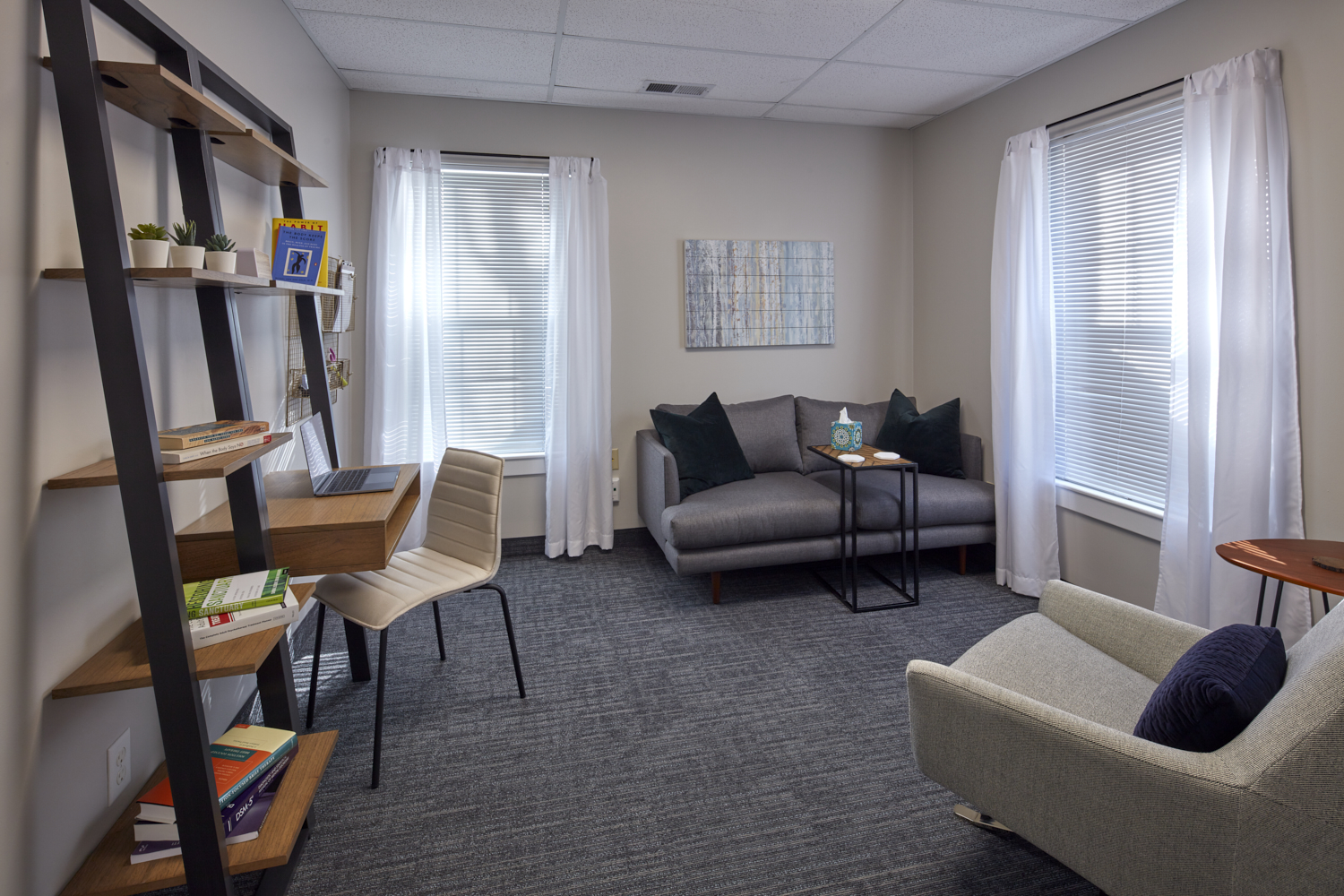
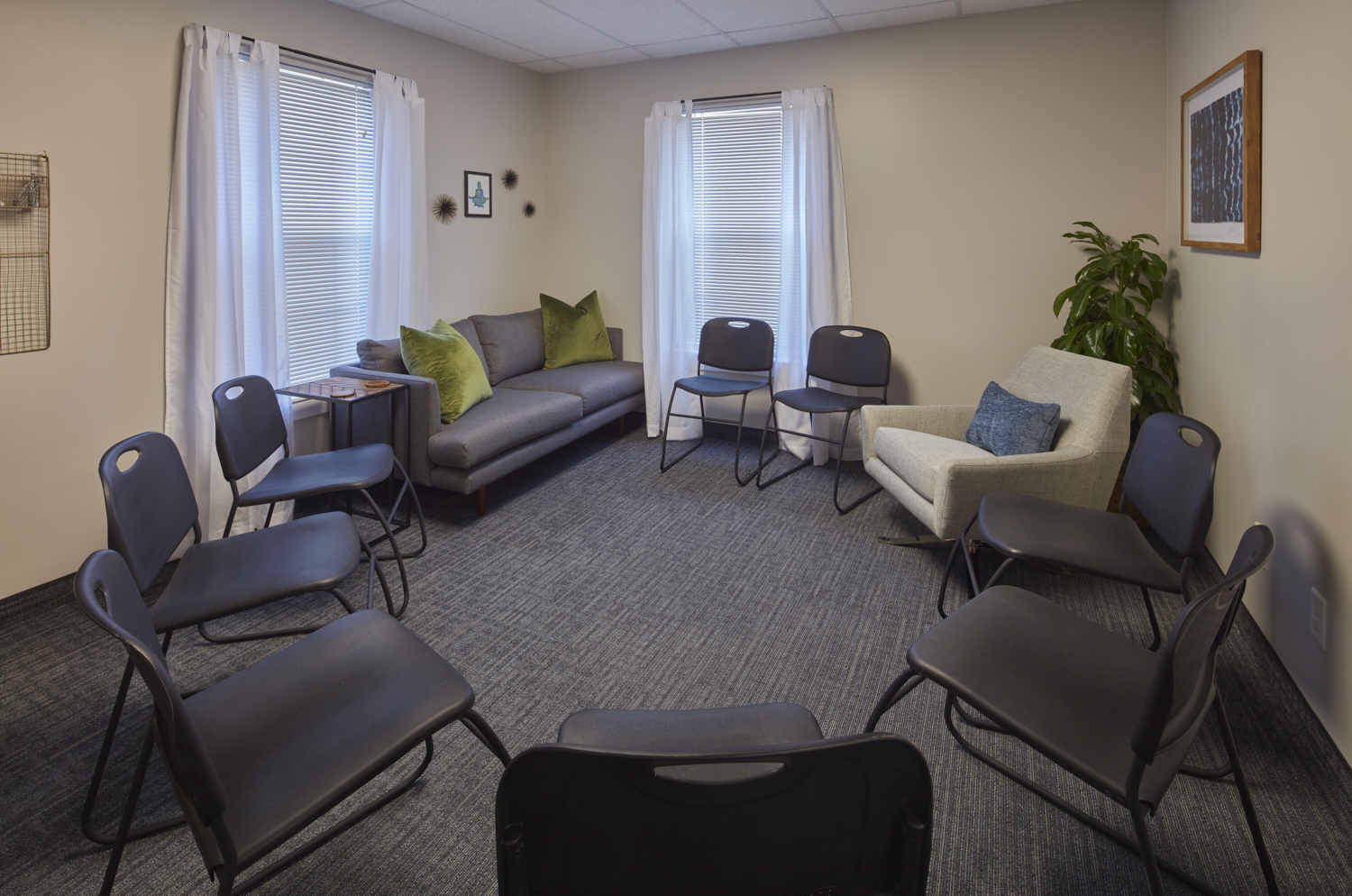
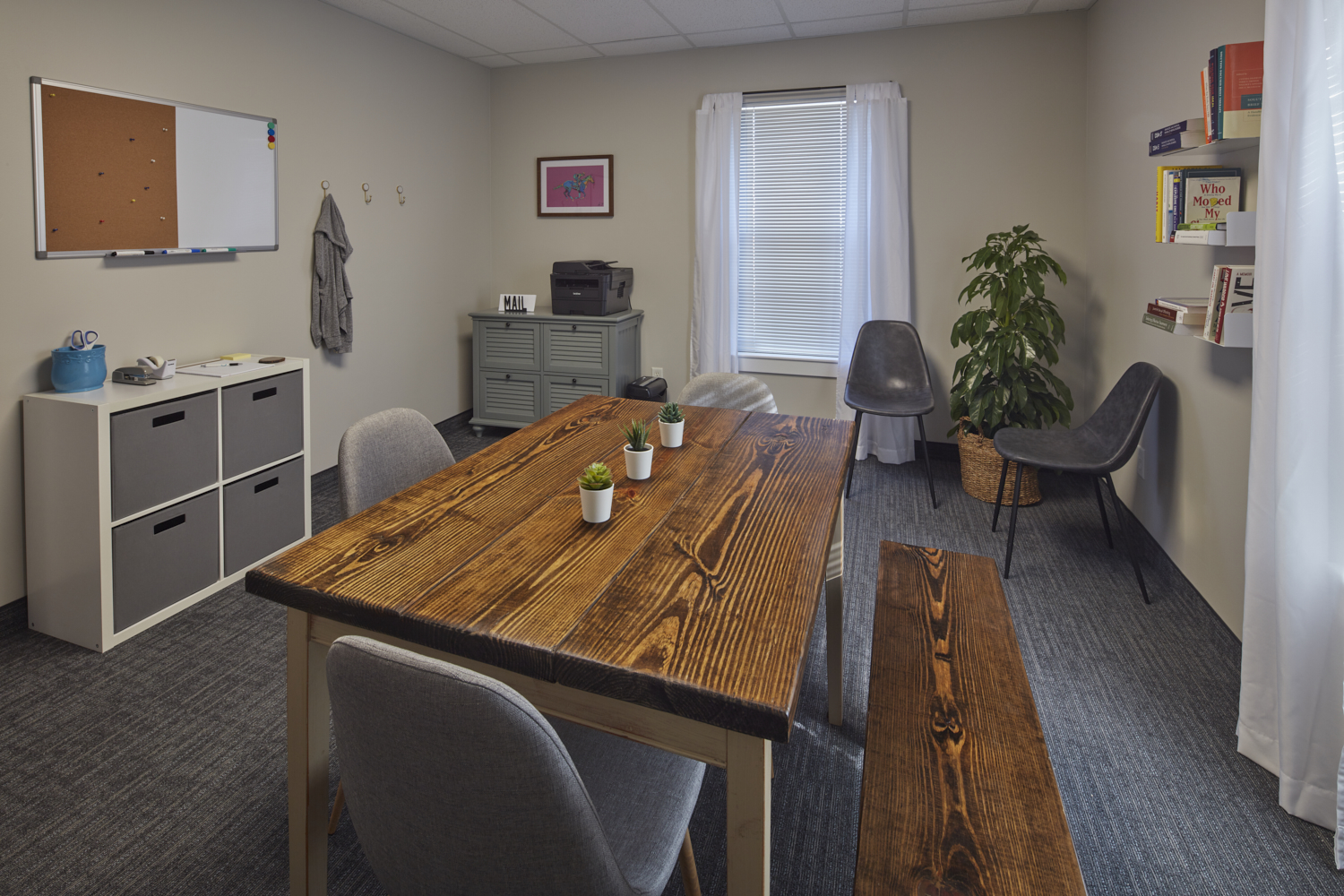
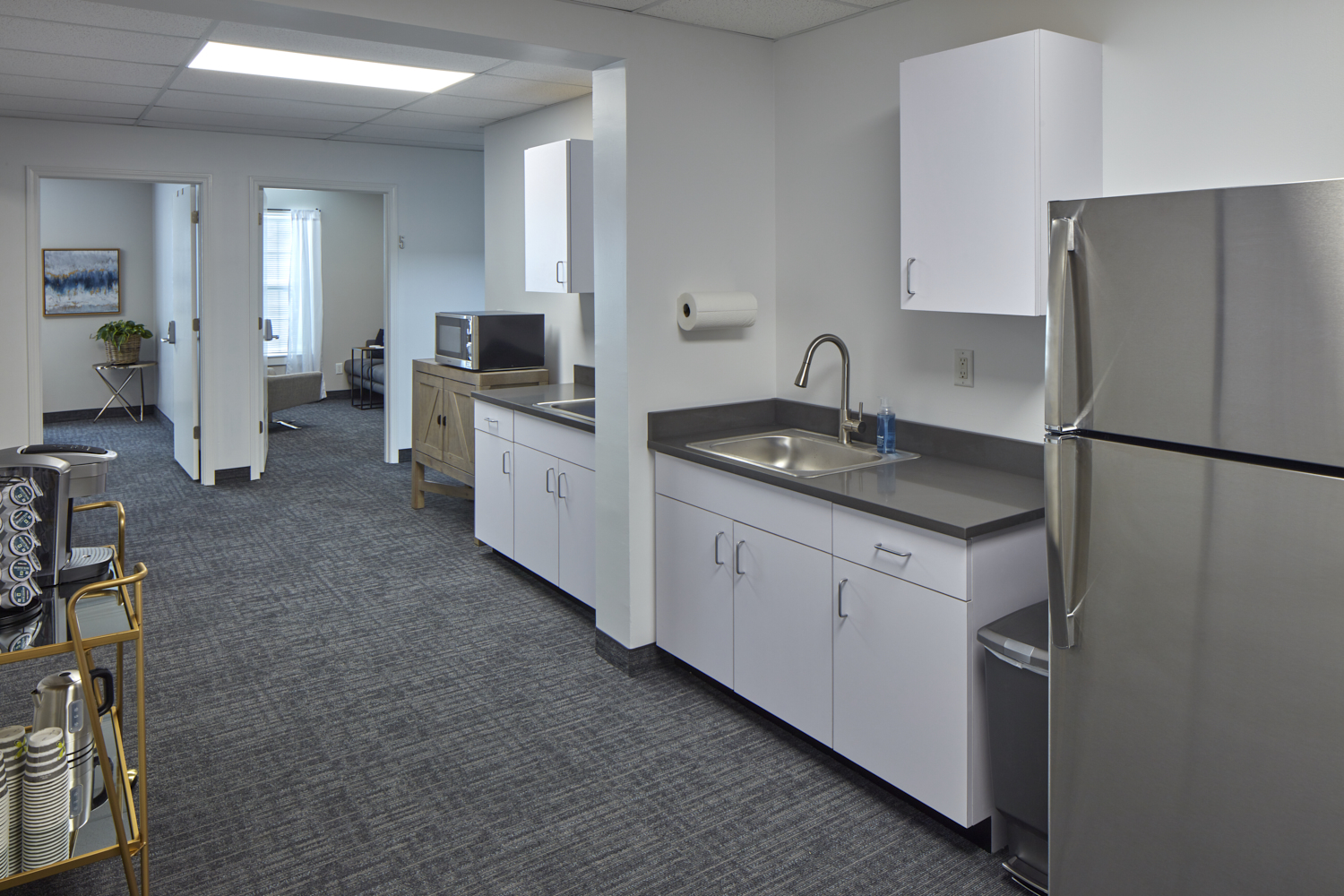
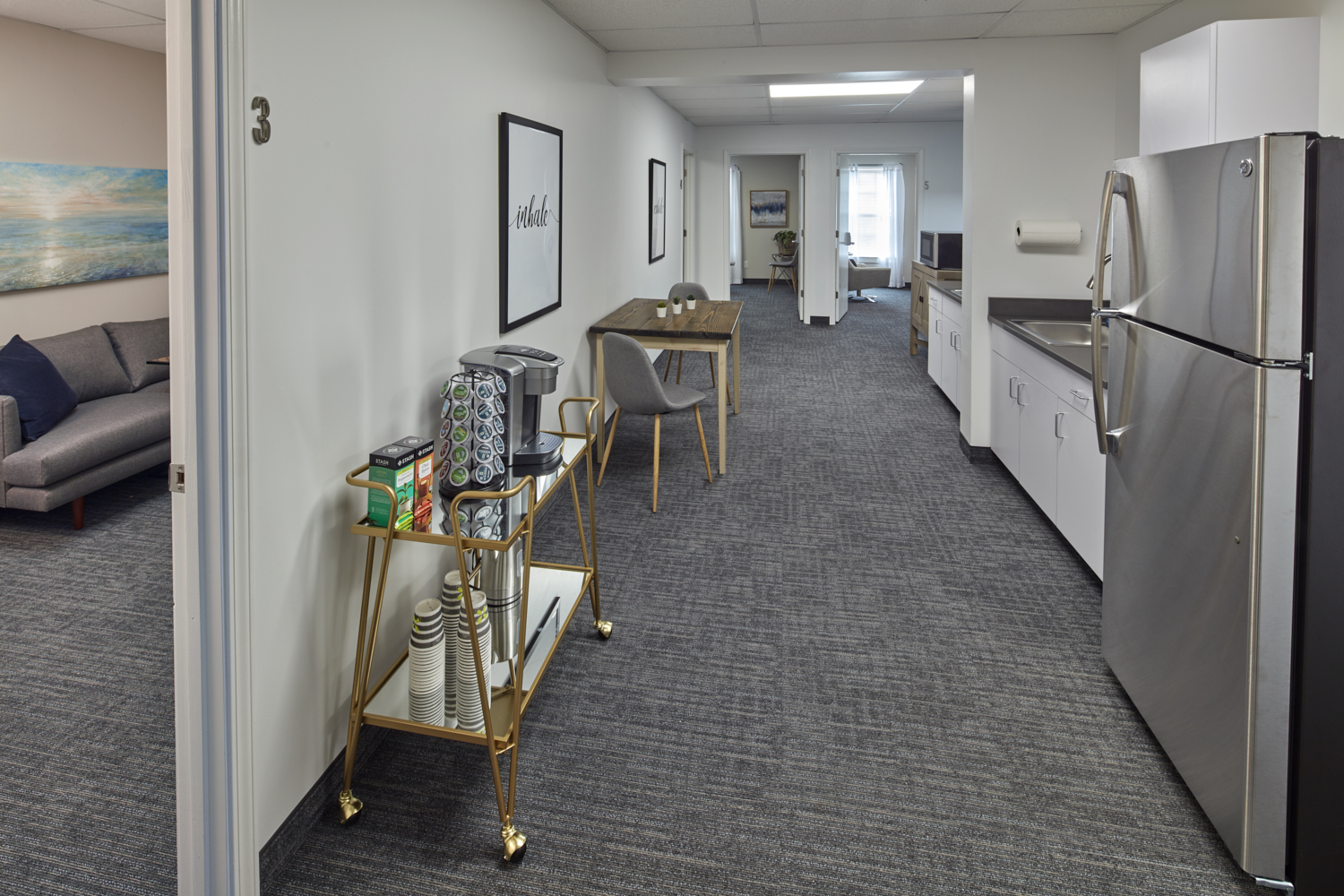
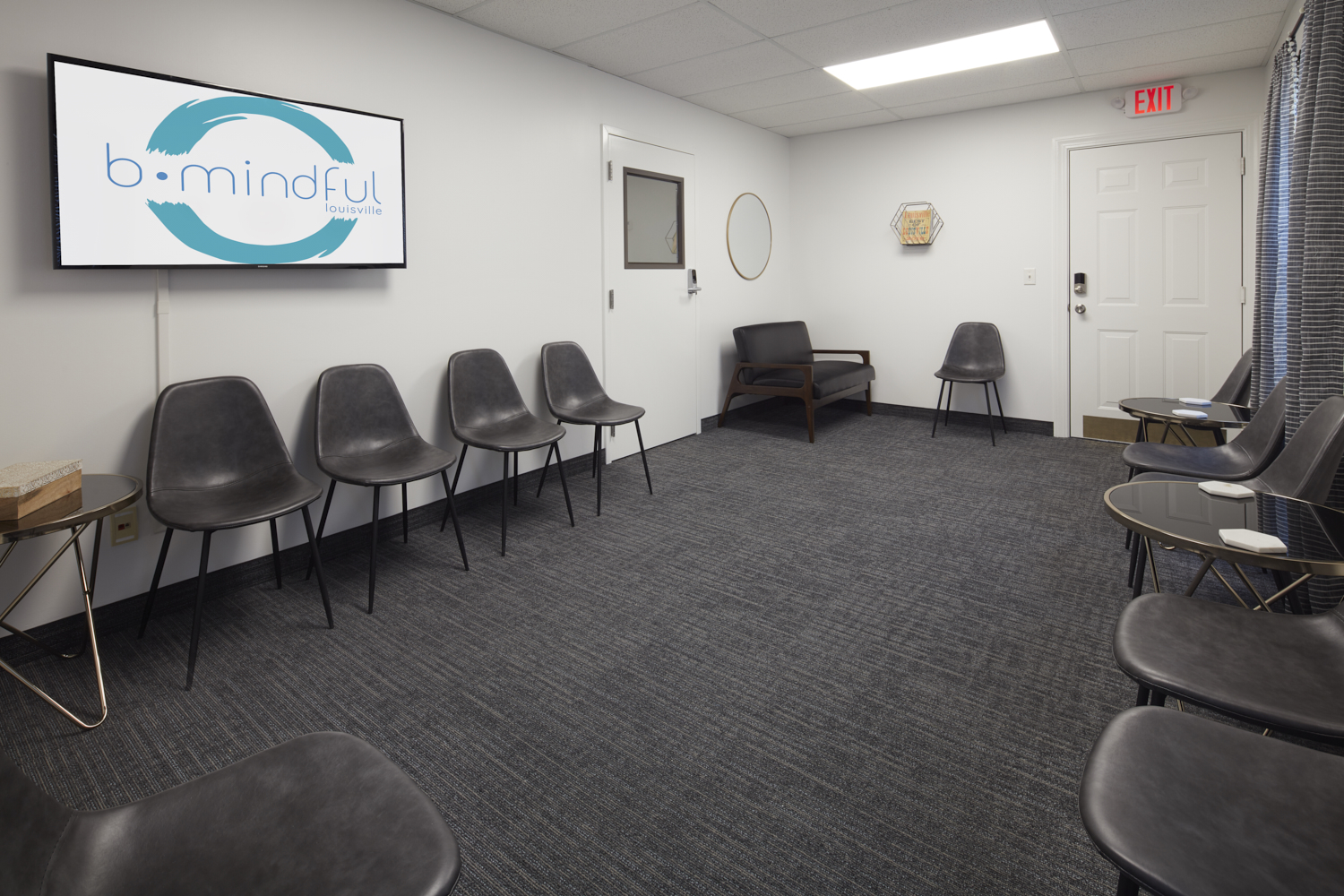
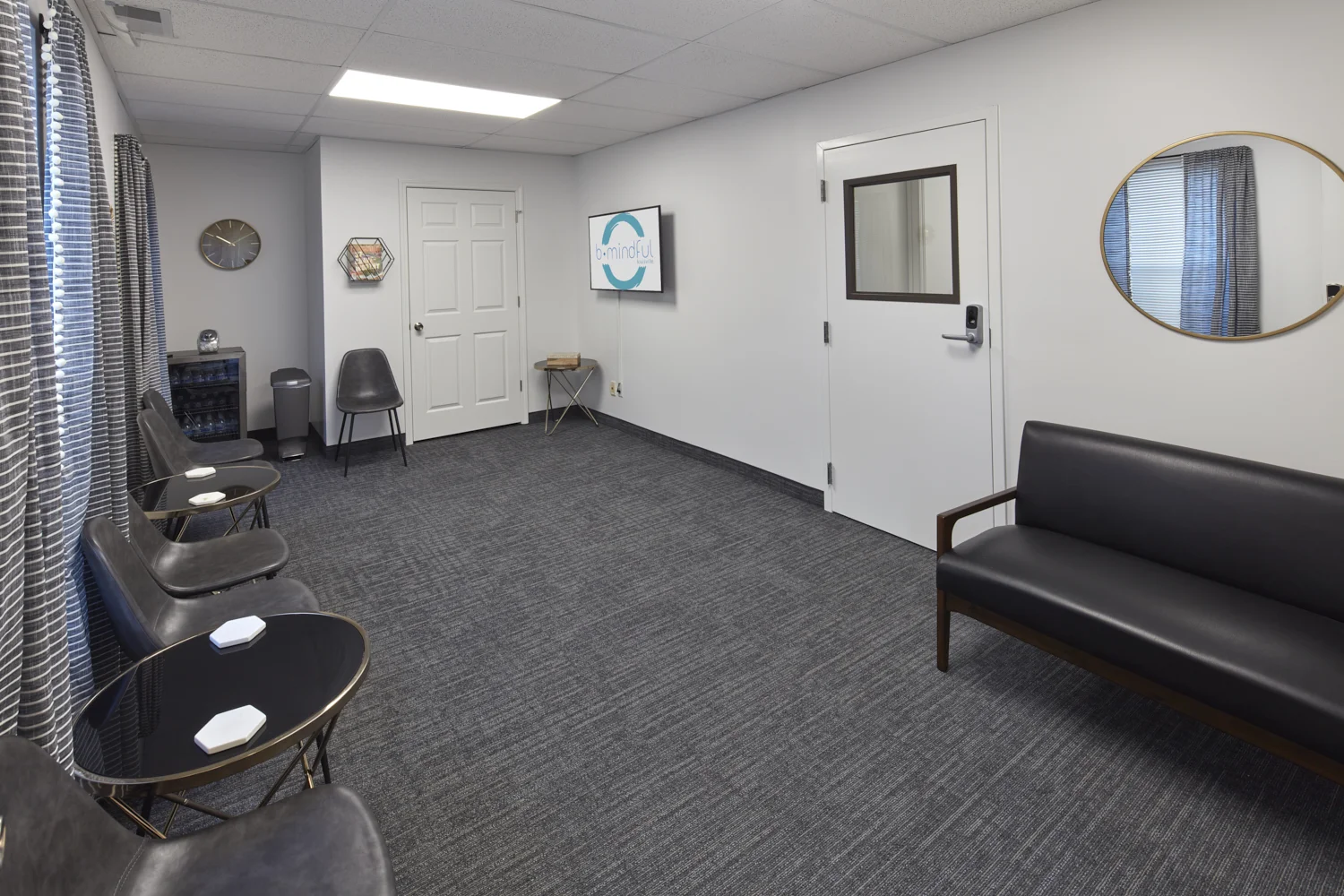
If you have been looking for an office for your Psychiatric (MD, DO or PSYCHNP) practice in Louisville, KY we are sure you know that not every space is created equally. And that is largely due to some of the huge costs involved in not only renting a space that is right for your patients but also furnishing it in a way that will make your patients feel calm and at home. In this post, we will go over the things we have heard from local psychiatrists & patients in Louisville, KY that make the difference for them when it comes to where they like to get treatment.
A Quiet Space
The space your patient interacts with you in can be as important as how you yourself interact with the patient. That means that a quiet office is paramount for patients to feel secure. Sometimes it’s easy to default to thinking of patient sessions as an energized talked. However, the evidence would say otherwise. It’s often the case that there are periods of long silence during sessions that are meant to provoke thought on the part of the patient. However, if your space is not quiet, this can be a huge challenge. Not only because your patient will feel weird being quiet in a loud space, but also because the noises can be distracting. And when a patient is distracted, it’s going to be difficult for them to really dig into their thoughts.
Nice Furnishings & Social Proof
You may find it odd that furnishings and a modern look have an effect on a patient, but these things hit the heart of what business experts have been talking about for years when they refer to “social proof”. What is social proof? It’s basically subconscious signals that indicate that you, the psychiatrist knows what they’re doing. Think of it this way. If you walked into a psychiatrist office and they barely had any furniture at all, you would think something is up. Alternatively, if you walked into a psychiatrist office and all of their furnishings are the nicest you have ever seen, you would think either consciously or subconsciously that this practitioner is at the top of their field. This example illustrates that there is a range of feelings a patient may experience purely based on the furnishings in your office. So you should do all you can to put this to work for you.
Final Thoughts
When either starting or growing your practice, you need to set everything possible to your advantage. This includes not only your style of interacting with your patients but the subtle queues your patients get from their surroundings. To make sure your patients are being set up for success by your surroundings, an office designed specifically for mental health and wellness practices is a great choice. You need a space designed for your exact needs and b.mindful Louisville is specifically designed and set up for health and wellness businesses. Call or text us at 502-528-1363 for a tour of our space, or Click Here to schedule a walk-through.

Shannon Gonter, LPCC, Owner and Founder of b.mindful Louisville
Have additional questions? Feel free to message me and ask!

Why Regus May Not Be The Best Solution For Your Louisville Health Practice
Finding the right office space when starting or moving your mental health or wellness practice is a big deal and can be stressful. However, this process can be easy if you know what issues to watch out for.
Finding the right office space when starting or moving your mental health or wellness practice is a big deal and can be stressful. However, this process can be easy if you know what issues to watch out for. If you are in the mental wellness and health fields, we are sure that you prefer your office to be your home away from home. And we know that you want your clients to feel the same way. Some common issues with renting space for mental health & wellness practitioners that we have heard first hand are problems with long-term leases, the Regus space not being set up for their particular type of business, weird furniture, and a lack of privacy for their clients.
While setting up your health and wellness practice in the Louisville Regus may seem like a no-brainer, it comes with a variety of hidden issues that could cause issues due to the nature of mental health businesses. Those issues include...
Do You Want Regus To Field Mental Health & Healthcare Phone Calls?
Sometimes when running a business that deals with health and mental crisis’, the reception or office admin team can be the “front line” when it comes to dealing with a client crisis. Unfortunately, due to the wide and varied type of tenants that Regus Louisville rents spaces to, there isn't a great chance that reception will know how to adequately handle these type of issues. To solve this you should look for a short-term office rental space in Louisville that is dedicated 100% to the mental health and wellness field. In addition to handling a crisis, you have to worry about regulations like HIPAA. According to the info we found on the Regus in Louisville, they do offer front-desk admin support often for a large extra fee. But even if you opt for this, there is no guarantee of client privacy or that the staff knows the appropriate regulations when dealing with inbound phone calls. This could lead to them breaching client privacy without them even knowing it happened, which could spell big trouble for you or your business.
Is It Private Enough?
The Regus in Louisville has hundreds of tenants. This is something you have to consider if you have clients coming to meet you there. Is their privacy going to be protected? That’s a difficult question to ask when you are dealing with other tenants that have businesses ranging from business consulting to real estate. The most common thing that mental and health professionals look for when it comes to privacy is a separate entrance and exits for clients. This is something that the Regus in Louisville doesn’t cater to and could be a huge negative for clients and customers who are considering becoming your client.
Ease Of Referrals
Often times when dealing with clients in the mental health and wellness field you need to refer them to another practitioner. This can sometimes cause discomfort or anxiety in clients that are used to meeting you in the same building week over week. For some, even the smallest notion of changing their routine can cause a huge stress in their life as they have to find the new office, find parking, and generally get comfortable with the new space. However, if the space you lease is dedicated to the mental health and wellness field there is a chance that you can refer within the same building your clients are already used to meeting you in.
Lease Requirements
According to some health professionals we interviewed who have used Regus within the last year, a lot of the benefits such as choosing a wide range of hours to see your clients are restricted to those who sign a 12-month contract. This may not be ideal for a few reasons. Firstly, because what if you or your clients dislike the space after using it for a few months? This can not only cause you discomfort professionally but could cause you to lose clients as well. Secondly, long-term commitments can be a huge strain on your business especially if you are just starting out or only need to use the space a few times per week. So you should look for a place that allows you to meet clients at any time they need, but that doesn't require something as long as a year-long contract to do so.
Is The Furniture & Architecture Right For Your Practice?
The Regus in Louisville caters to business that ranges from small business to attorneys, to CPAs. And as a result, the offices and decoration have a more “business” feel that you may not find in a smaller space dedicated to the health and wellness field. Depending on the type of health and wellness practice you run, the building could just not be accommodating to your type of business. Do you work with kids? Then you have to worry about the echo of the space, the hard concrete floors, and being disruptive to the other businesses in the space. A good solution would be finding a space that is dedicated and designed for mental health and wellness where all the other tenants are understanding and knowledgeable of what other practitioners go through. This means that the interior design will be catered with mental health and wellness professionals in mind, and provide a more calming environment and manner of decor.
To overcome these issues, a shared office space designed exclusively for mental health and wellness practices are an amazing option. You need a space designed for your exact needs. b.mindful Louisville provides a better alternative to Regus Louisville and is specifically designed and setup for health and wellness business. Call or text us at 502-528-1363 for a tour of our space, or Click Here to schedule a walkthrough.

Shannon Gonter, LPCC, Owner and Founder of b.mindful Louisville
Have additional questions? Feel free to message me and ask!